



TENSILE ARCHITECTURE: WHY FLEXIBILITY RIMES WITH LONGEVITY
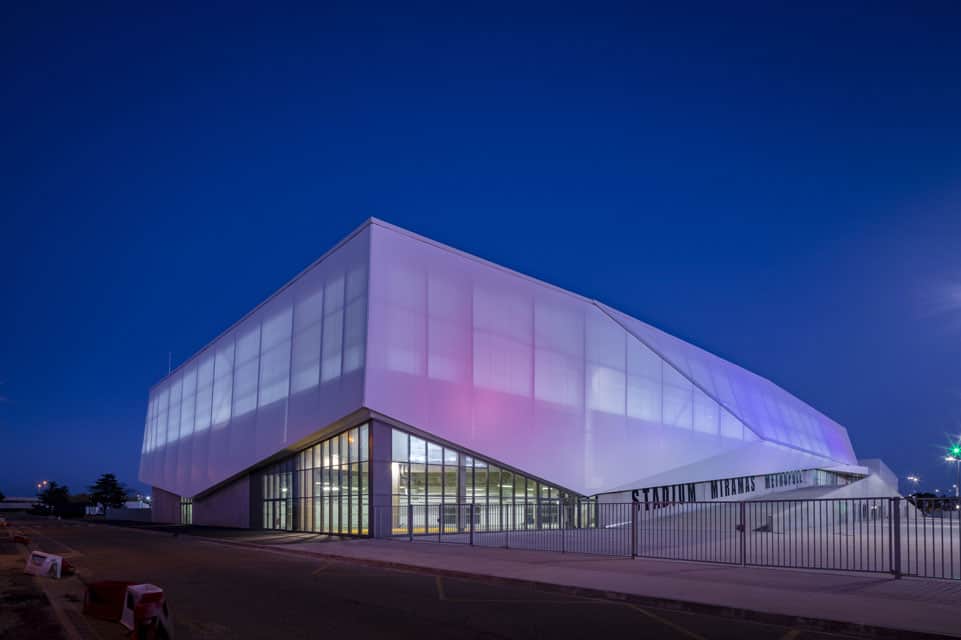
In the collective imagination, the words “membrane” or “fabric” sometimes evoke the lightness of a temporary structure. However, in the world of modern construction, tensile architecture has emerged as a high-tech solution, capable of rivaling traditional structures while offering unparalleled architectural freedom.
Fabric structures: limitless flexibility
One of the greatest advantages of a fabric structure lies in its plasticity. Unlike rigid concrete or steel, the membrane conforms to complex shapes, providing a strong visual identity to every project.
It adapts to every structure and its intended use:
It adapts to every structure and its intended purpose. Used as a roof covering for outdoor courts (sports, recreational, or school), the textile membrane provides effective protection against the elements while maintaining a visual lightness that does not clutter the urban space.
Its span capacity is exceptional. It allows for covering very large spans without intermediate posts, making it ideal for sports complexes and stadiums where unobstructed views are essential.
Climate adaptability and thermal comfort of tensioned envelopes
The textile membrane is more than just a cover; it is an intelligent filter. Its ability to adapt to the environment is a key factor in sustainable construction:
- Natural luminosity: Thanks to its translucency, the membrane allows diffused and homogeneous light to pass through. This drastically reduces the need for artificial lighting during the day while preventing glare.
- Heat management: By reflecting a large portion of solar radiation, the membrane limits the greenhouse effect under the structure, ensuring optimal thermal comfort, even in the height of summer.
- Albedo effect and white color: The membrane’s ability to reflect solar rays without storing them—largely due to its white color—helps limit the “urban heat island” effect in city centers.

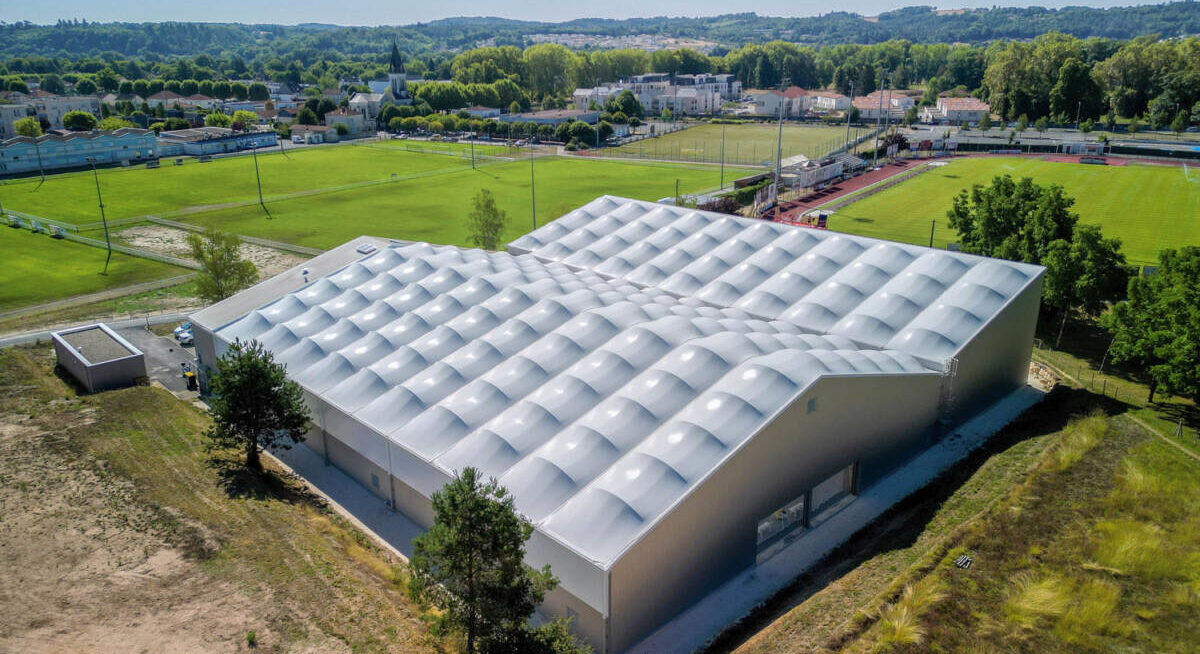
Proven durability: the long-term security of tensile architecture
This is where we clear up any doubts: textile membranes are built to last, even on large-scale projects.
Resistance to external elements
The membranes selected by SMC2 are treated to resist UV rays, mold, and pollution. They retain their mechanical properties and aesthetic appeal for several decades (often 20 to 30 years or more, depending on the materials used).
Structural stability
Textile membranes boast a tensile strength of 300 to 800 daN/5cm in both warp and weft. Thanks to the principle of double inverse curvature, the fabric remains perfectly tensioned over time. It is fully capable of supporting heavy snow loads and resisting violent winds without changing shape.
Textile construction and international landmarks
Did you know? Most major stadiums built in recent years worldwide utilize tensile roof solutions. This is the ultimate proof of the material’s reliability under extreme constraints. Notable examples include the London Olympic Stadium, the Olympique de Marseille stadium (Stade Vélodrome), and the Kuala Lumpur Formula 1 circuit.
At SMC2, we are firm believers in the benefits of the textile membrane. That is why it is our material of choice for our structures. Whether protecting a school playground or covering the stands of a national football stadium, tensile architecture is the answer to the challenges of modern construction: speed of execution, bold aesthetics, and long-term durability.