



WHY COMBINE A TIMBER FRAME AND A TENSILE ROOF FOR SPORTS BUILDINGS?
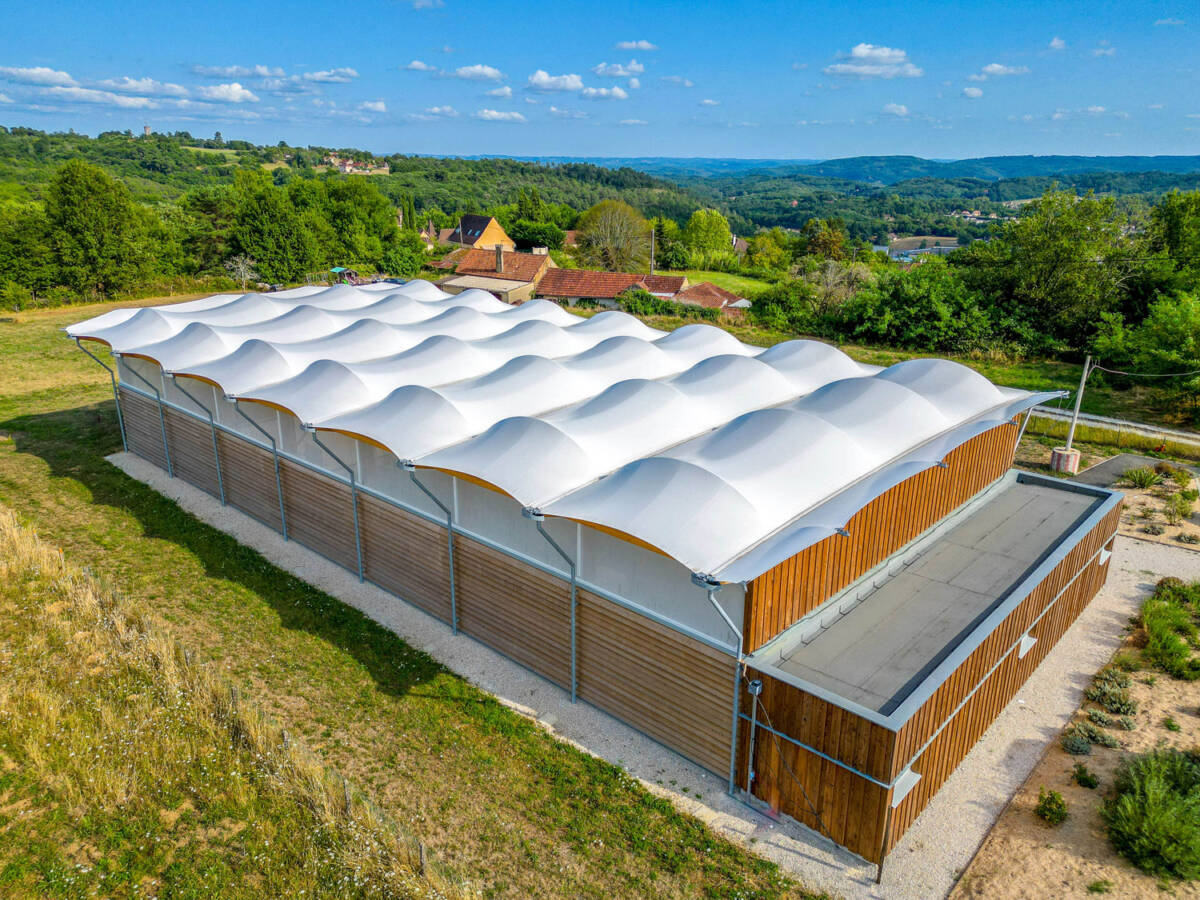
The construction of sports facilities is evolving towards more sustainable, economical, and architecturally expressive solutions. Combining a wooden structural frame with a textile membrane roofing has become a high-performance alternative to traditional concrete or steel structures.
Used for gymnasiums, covered tennis courts, canopies, and multi-sport halls, this combination provides an excellent balance of technical performance, cost control, and environmental quality.
Timber frame and tensile roof: A Sustainable and Creative Building Solution
Wood Frame: A Major Environmental Asset
Wood is a renewable material that naturally stores CO₂ throughout its life cycle. When used as a structural material—especially glue-laminated timber—it significantly reduces the carbon footprint of a sports facility.
Textile Membrane: Lightweight and Material Efficient
Textile roofing uses considerably less material than traditional roofing systems. Its light weight reduces permanent loads on the structure and therefore limits foundation requirements, resulting in a resource-efficient and environmentally considerate construction.
The fluidity of the membrane enables the design of large-span structures while offering a diversity of shapes and colors to support creative architectural solutions.
A Construction System that Supports Creativity
By combining a glue-laminated timber frame capable of spanning large distances with an ultra-light textile membrane, it is possible to create vast uninterrupted volumes while maintaining an optimized structure.
This approach fosters:
- Significant architectural freedom
- Improved visibility for spectators
- Flexibility of use
- Fast and controlled construction processes
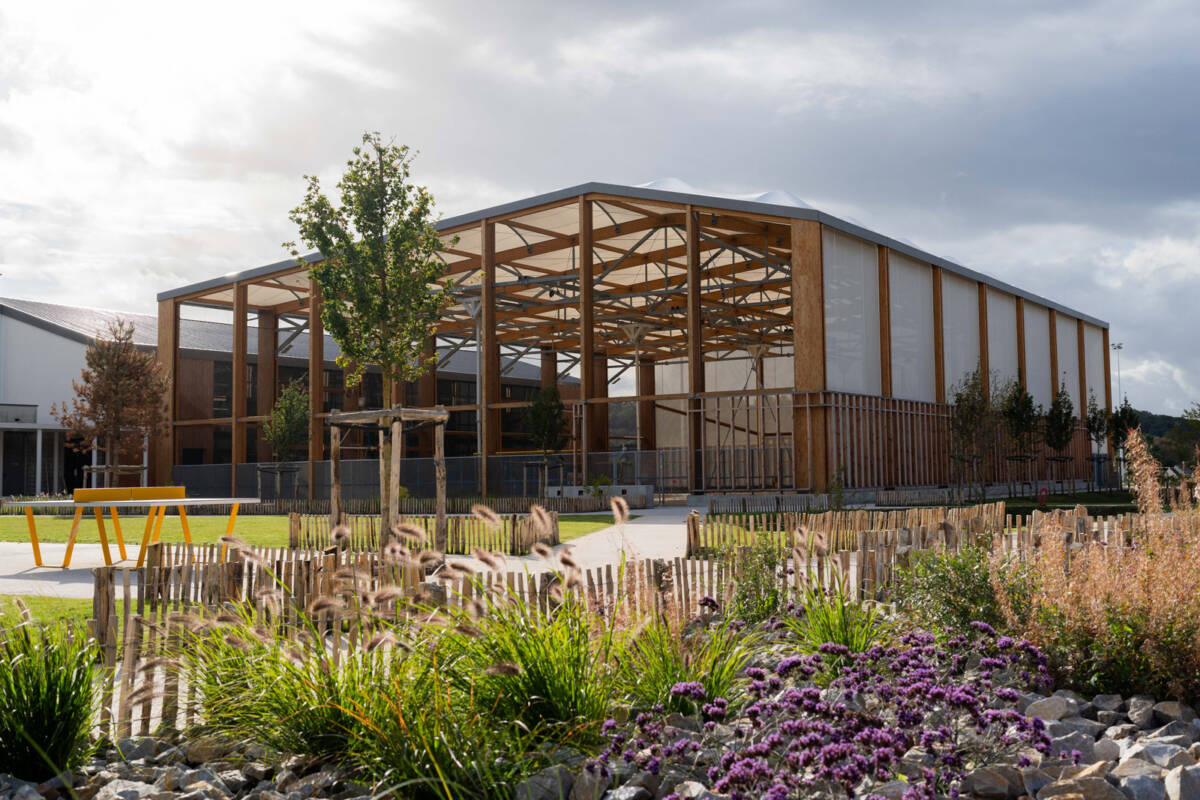
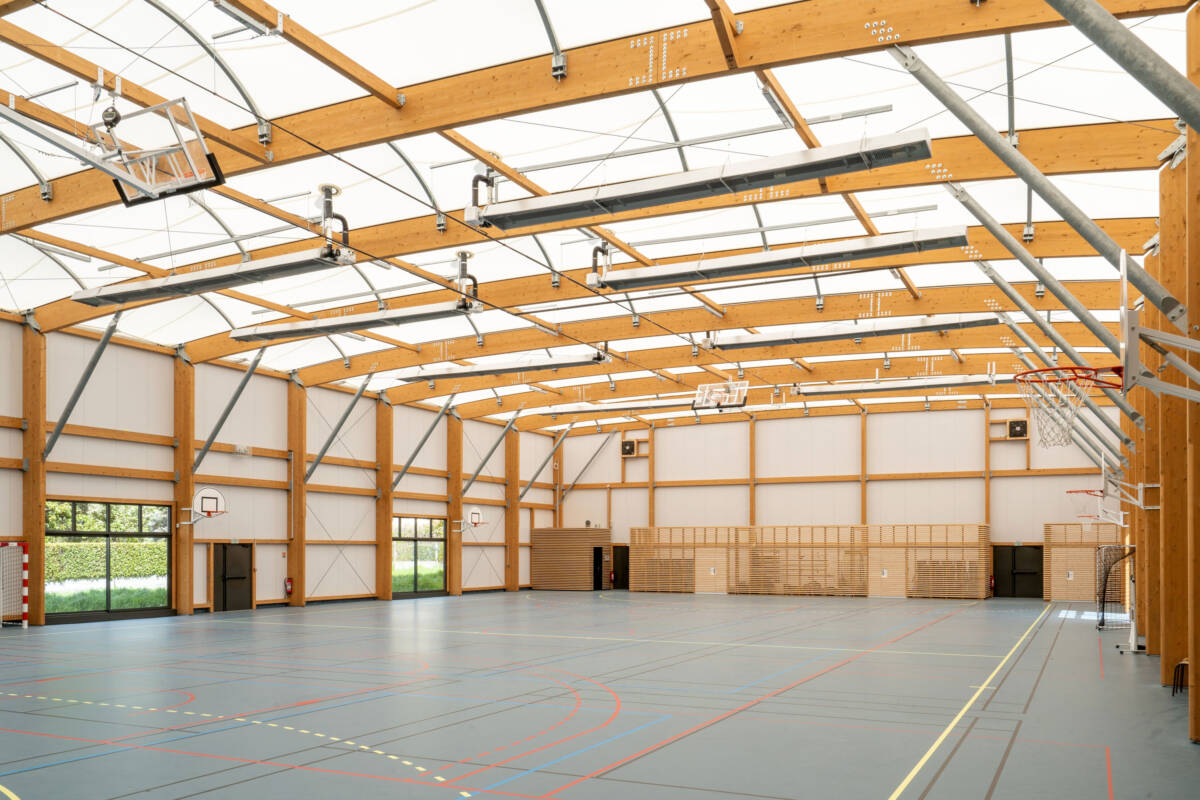

Glulam structure and Tensile fabric: A High-Performance Answer to Sports Facility Needs
Cost-Effective for Operators
Timber elements are prefabricated off-site for rapid assembly. The textile membrane is then installed and tensioned in a short timeframe.
The wood + textile membrane system allows for overall cost optimization:
- Lightweight structural frame
- Reduced foundations
- Shorter construction timeline
- Simplified maintenance
In many cases, the initial investment cost is lower than that of a traditional build, especially for gymnasiums or medium-sized covered play areas.
Enhanced Comfort for Athletes and Users
Thermal Comfort: Wood naturally provides good thermal insulation. When combined with a double-skin textile membrane with integrated insulation, the roof can deliver strong energy performance.
Acoustic Comfort: Timber contributes to reducing sound reverberation—a key factor in sports halls. Additional acoustic treatments can be integrated as needed.
Natural Light: Textile membranes are translucent, allowing natural daylight to filter through, reducing the need for artificial lighting and enhancing visual comfort for users.
In Conclusion, choosing a wooden frame combined with a textile membrane roofing for a sports facility means opting for:
- A sustainable, low-carbon construction
- Large unobstructed spans
- Cost control
- Fast delivery
- Optimal comfort for users
- A modern, value-enhancing architecture
Faced with environmental, budgetary, and functional challenges, this construction approach has proven to be a particularly relevant solution for today’s and tomorrow’s sports facilities — and SMC2 has been convinced of this for over 20 years!